

Your shopping cart is empty!


2006 Hong Tai Chang 0803 Raw Pu-erh Tea Cake
Old raw (sheng) pu-erh tea from the Thai factory that produces pu-erhs under the name Hong Tai Chang.
The tea is made by a Chinese master, a native of Yunnan. He has been making Pu-erhs for more than 40 years. Then he’s been retired and passed on all his knowledge and experience in producing and storing pu-erhs to his disciple, whom we’re working now with.
The material of 200-700-year-old tea trees, the harvest of 2006. Province of Chiang Mai, northern Thailand, 1300 meters.
The dry tea smells with bark, dried fruits, spices. In the taste, there are various dried fruits: raisins, dried apricots, plums. Light smoky flavor reminds of some Chinese raw puers and makes dried fruits taste more like prunes. There are some savory wood tones and spices.
The tea possesses powerful energy that relaxes. It can hold you in calm concentration for a quite long while.
Reviews (10)
- This is a second review, to find out how this tea tastes now that it is a couple of decades old -
Brief (5-10 seconds) steeps in 90 Celsius water.
Liquor is a clear dark orange-brown in color.
Taste gives a dry woody note on the palate, followed by a sweet aftertaste that resembles dried prunes and bark, with a touch of chinese medicinal herb.
Mouthfeel is slightly dry and sticky, medium body, medium finish.
I got a sense of dryness at the back of the throat as well.
Wet leaves are black-brown in color, giving off a sweet aroma of smoked light brown sugar and dried prune/plum.
Flavor intensity starts to mellow down by around the 6th infusion, thus best to steep longer from here onwards.
A longer (1 minute) steep gives a deeper color hue to the liquor with a bolder herbal-sweetness in the aftertaste, with a hint of bitterness.
The difference between the 2023 review and now is that now I detected medicinal and bitter notes, a profile that I did not notice back then.
There is a possibility this is due to a 3-year further aging period.
Either that or the fact I accidentally put more tea leaves than usual in my teapot.
This Hong Tai Chang #0803 also seems to have more dry-woodiness on the palate compared to the #0802 variety.
Overall, this is a bold tea and suitable for those who enjoy old raw puerh variety that leans more woody/earthy.
This has to be the best value for price tea I have had. If it were to be sold as tea from Xishuangbanna, it'd cost four times as much.
It's got musty cedar, leather, wood, tobacco and oxidised apples from the wet leaves, which also go into the flavour profile. It's surprising how subtle and ethereal the tea is, with a strong spicy-woody-dates taste that transforms into fruity and even some florals. Also strong camphor cooling. The endurance is pretty good with 15 steeps, brewed with a firm hand. Very active mouthfeel, with watery texture all the way. The cha qi crept in slowly. It gives a strong body feeling in the stomach, chest and upper legs, with a relaxing mental space on the strong side as well that lasted all day.
Definitely a staple of what semiaged old tea tree should be! Glad that I blind-bought a cake :)
7.8 grams leaf in 118 ml unglazed Duchek teapot. Water just off the boil, flash brews. Just-opened cake looked funky but beautiful and healthy, mostly a deep and rich brown. Smelled like very old baled hay. Nice compression - broke apart easily-enough with both hands and knife. The fragrance from the warmed dry leaf was of faint old tobacco, musty cedar closet. Rinse brewed out deep and rich golden brown, beautiful and almost clear. Faint tar and blackberries the smell from the brewed warm leaves in the teapot. Weak sweet taste from a little sip of the rinse just out of curiosity before the tea took off and me with it. Gorgeous broth, woody rough/sweet taste, thickish and mostly wet, sometimes juicy, always sumptuous and delicious all the way until I had to stop.
Brief (5-10 seconds) steeps in 90 Celsius water.
Liquor has an almost-clear golden caramel color.
Taste has a woody note with a somewhat sweet aftertaste that is not fruity nor floral, but more earthy.
Mouthfeel is slightly sticky, with a touch of astringency.
Wet leaves are dark brown in look, giving off a spiced woody aroma.
The flavor intensity starts to mellow down by the 5th/6th infusion, thus best to steep longer from here onwards.
A longer (1-minute) infusion doesn't give that much of a difference in flavor intensity apart from some dryness on the palate.
Tea has changed over two years, in my opinion. It has become much more restrained, softer and lighter. I do not think that you can say unequivocally about these changes are positive or not - it's a matter of taste. I give it 5 stars, because I definitely like this tea. The aroma is quite bright, harsh, fruity with hints of leather and wood, reminded me of the Banzhang Sheng of the same years. The infusion is light, clean, with a slight tartness, turning into sweetness. On the palate the same dried fruit, leather, woodiness, perhaps a hint of spices, medicinal herbs. The combination of tones creates a picture of a heavy, aged tea, which is interestingly perceived in combination with the lightness of the infusion. The chi is explicit, meditative, the tea warms me well, and can set me up for both contemplation and focus on some work. I will be happy to return to it. Thank you!
Related Products

Aged high mountain raw pu-erh tea from old tea trees, produced in 2004 in Thai factory under the famous Сhinese brand Hong Tai Chang.
The trees are grown in Chiang Rai Province in the north of Thai..
$185.00
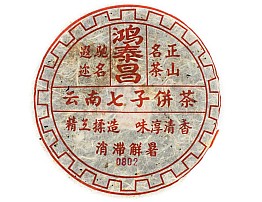
Very well aged 2006 raw pu-erh tea of Hong Tai Chang brand. Province of Chiang Mai, Northern Thailand, 1300 meters. The material is from leaves of ancient and wild trees, 200-700-year-old.
..
$215.00

Semi-aged raw pu-erh tea from the Ming Dee factory. Among other Thai 2000’s pu-erhs, this one is a completely original tea with a unique flavor profile. Amazing how they achieve such a strong differen..
$195.00

This Hong Tai Chang sheng is of the same year (2006) and crafted by the same master as our popular 0802 and 0803 cakes. We've known about this tea since 2015 and even offered it for a short time, but ..
$215.00
