

Your shopping cart is empty!


2016 Wild Pu-erh Tea “Lord of the Forest” 1000-year-old trees Myanmar
Wild raw pu-erh tea from Myanmar, 1500 m. Ancient tea trees, more than 1000 years old.
There is no need to write that it's a rare tea. Some Taiwanese tea houses redeem all this mao cha immediately after production and it does not arrive at the tea market outside Myanmar and Taiwan.
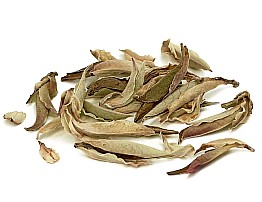
Taste is unique but in classic Ye-Sheng tea style. Dry leaves aroma has unusual notes of grape wine. Tastes like no other wild pu-erhs we know.
There are notes of wine, berry jam, plum, grapes, and cut wildflowers. The finish has a light and beautiful fresh peach.
Cha Qi effect: calm, contemplation, tranquility.
*The cover was designed by artist Irina Verner
Reviews (26)
- This is a second review, to find out how different this tea tastes now that it is a decade old -
Brief (5-10 seconds) steeps in 90 Celsius water.
Liquor is a clear medium amber in color.
Taste gives a green-fruitiness on the palate right upfront, slightly jammy, followed by an aftertaste that is a mix of green plum wine and bark.
Mouthfeel is slightly dry and sticky, medium body, medium finish.
Wet leaves are muted olive green in color, with some bronze hue, giving off a sweet aroma of unripe plums and light brown sugar.
Note: The first couple of steeps surprisingly had a hint of bitter note and extra dryness on the palate that translates into almost like an astringency, however, but the 3rd steep the bitterness and dryness started to disappear.
Flavor intensity starts to mellow down by around the 5th/6th infusion, thus best to steep longer from here onwards.
However, a longer (1 minute) steep at the 6th/7th infusion doesn't give much of a difference in taste profile, as it already became quite mellow and consistent after the 5th infusion.
To me the taste difference between 2021 review and now is almost none, despite the 5-year difference in storage.
Overall, it is a flavorful fruity sheng puerh variety.
A truly amazing tea. Probably the best sheng I’ve ever had. My tea experience isn’t that big, but this sheng is something else. It’s like a compote of flavors — prune, rosehip, apple, dried apricot — that also gives you a certain state of mind. The only thing I’ve realized for myself is that this tea is not for company. It’s for deep solitude.
I like its Cha qi. It's probably the only reason for repurchasing. The flavor is nice but it's way too blend for my liking. I've experimented brewing it in different tea-making-vessels from a porcelain gaiwan to different kinds of clay teapots, still i need to put much more tea leaves to get that flavor up. Overall I don't think this is a bad tea, I just like my pu-erh a little bolder.
I brewed 5 grams / 100 ml water, at 95 degrees Celsius, starting with 5 second steeps.
Very interesting and unusual tea, relatively mild and it has a certain freshness about it, despite it's age. Different from an usual sheng, reminds me partly of a white tea.
Notes that I found: a lot of fruitiness (plums, green apples, baked apple peel), some sweet woodiness (reminds me of fresh bamboo shoots), orange peel, and slight minerality
Texture wise, it has a certain creamy thickness that reminds me of corn milk, which also resonates with the sweetness that can be found in the flavor profile.
Definitely worth buying. Its an awesome tea!
Words can't describe it.
Related Products

Raw pu-erh tea from 200-year-old trees of Myanmar (Burma). Harvest of spring of 2013.A beautiful tea from high-quality material and classic processing.Aroma is sweet, floral. Unlike the Thais, the tas..
$65.00

Raw pu-erh tea from Myanmar (Burma), 100-200-year-old purple trees. Spring 2013.
Appearance of dry tea leaves reminds of a Dan Cong tea of light roast. However, it is a purple leaf sheng pu-erh of q..
$13.00

2006 Loose Raw (Sheng) Puer of medium roast. The leaves have been harvested from a garden with trees from 100 to 500 years old, altitude is about 1300 meters.
A quite strong fire and significant agin..
$10.00

It's not so easy to get the leaves from wild trees in the jungles. From the photos, you can understand how difficult access to such wild tea is. This white tea was harvested directly from these trees ..
$20.00

Thai Jungle wild pu-erh tea is made, in fact, from the same old trees as “Lord of the Forest” sheng, but from the Thai side. I am tempted to say that this is the same tea, especially since the terroir..
$98.00

This wild tea is collected from probably the oldest tree in Thailand. The estimated age is more than 2000 years. The tree has already begun to crumble, it is difficult to say how many more years it wi..
$38.00

Wild black tea from the heart of the Thai jungle, where tea trees grow among other plants in biodiversity and harmony.
“Purple joy” is twisted into elegant curls, brewed into a semi-dark amber inf..
$12.00
Harvesting such tea is extremely challenging: the pickup truck stops at the edge of the forest, and the pickers must cut their way through high grass and shrubs with machetes, as the path quickly beco..
$23.00

Thai Jungle wild pu-erh tea is made, in fact, from the same old trees as “Lord of the Forest” sheng, but from the Thai side. Spring 2024 harvest — fresh wild shengs are exceptionally good and, dare we..
$98.00
